
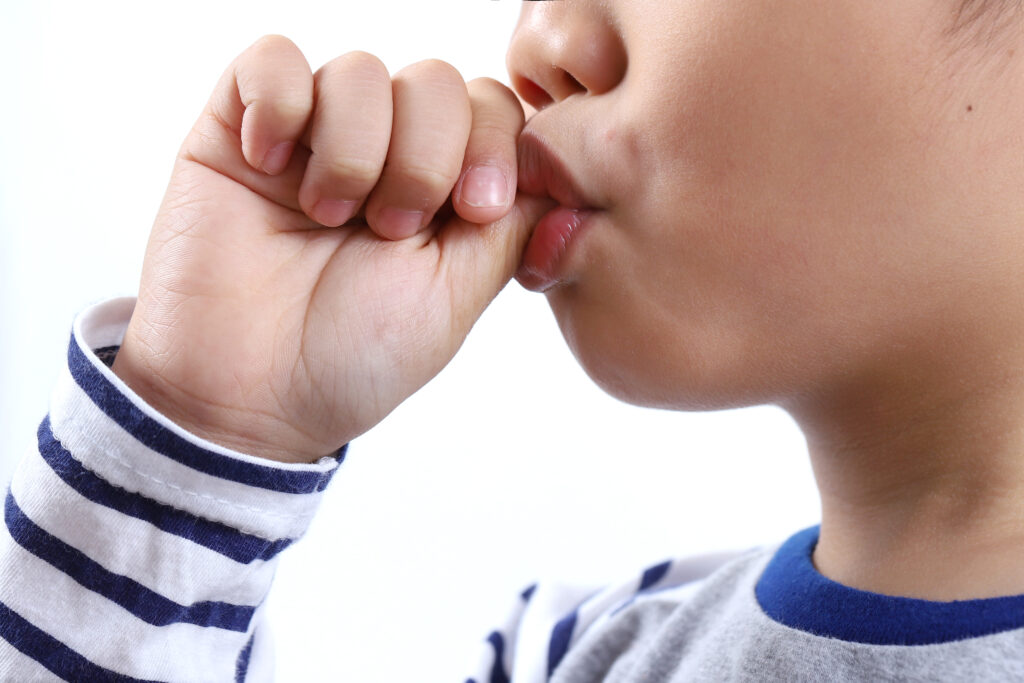
Thumb sucking is one of the most common childhood habits, and for many babies, it’s completely normal. It provides comfort, helps with self-soothing, and can even make it easier for little ones to fall asleep. However, many parents eventually wonder: Could thumb sucking cause bite problems?
The answer depends on your child’s age, how often they suck their thumb, and how much pressure is placed on their developing teeth. At Apple Tree Pediatric Dentistry, we help Lawrenceville families understand when thumb sucking is simply a phase and when it may begin affecting oral development.
Why Do Children Suck Their Thumbs?
Thumb sucking often begins before birth. Many infants naturally suck their thumbs or fingers because it’s a comforting reflex. Most children gradually stop on their own between the ages of 2 and 4.
For younger children, this habit usually isn’t a cause for concern. The biggest concern arises when thumb sucking continues after permanent teeth begin developing or when the habit is frequent and vigorous.
How Can Thumb Sucking Affect Your Child’s Bite?
Not every child who sucks their thumb develops dental problems. However, prolonged thumb sucking can place constant pressure on the teeth and jaw, potentially leading to thumb sucking bite problems.
Some of the most common orthodontic changes include:
- An open bite where the front teeth don’t touch when the mouth closes.
- Protruding upper front teeth that stick forward.
- Changes in jaw growth and alignment.
- Narrowing of the upper jaw.
- Increased likelihood of needing orthodontic treatment later.
The orthodontic effects thumb sucking creates depend on three important factors:
- How often your child sucks their thumb.
- How long each thumb-sucking session lasts.
- How forcefully they suck.
Children who suck their thumb occasionally are generally at much lower risk than those who do so for several hours every day.
When Should Parents Become Concerned?
Many dental professionals recommend paying closer attention if thumb sucking continues beyond age four or five. By this time, permanent teeth are beginning to erupt, making the bite more vulnerable to changes.
You should consider scheduling an evaluation if you notice:
- Front teeth moving outward.
- A visible gap when your child bites down.
- Speech changes such as difficulty pronouncing certain sounds.
- Your child continues thumb sucking throughout the day and night.
Early evaluation allows us to monitor development before small issues become larger orthodontic concerns.
Can Bite Problems Be Reversed?
In many cases, yes.
If a child stops thumb sucking while the mouth is still developing, minor bite changes may improve naturally as the jaw continues to grow. Younger children often experience significant improvement without extensive treatment.
However, if the habit continues for several more years, the changes may become more permanent and require orthodontic care to correct alignment.
The earlier the habit ends, the greater the chance the teeth can return to a healthier position on their own.
Gentle Ways to Help Your Child Stop Thumb Sucking
Breaking a comforting habit takes patience. Punishment or criticism usually makes the habit worse because children often suck their thumb when they feel tired, anxious, or stressed.
Instead, try positive approaches such as:
- Praise your child for thumb-free periods.
- Identify situations that trigger thumb sucking.
- Offer comfort items like stuffed animals or blankets.
- Use reminder charts and small rewards.
- Encourage healthy coping skills during stressful moments.
For older children who are motivated to stop but struggle, your pediatric dentist can recommend additional strategies or habit-breaking appliances if necessary.
Why Regular Dental Visits Matter
Routine dental checkups allow us to monitor how your child’s teeth and jaws are developing long before serious problems appear.
At Apple Tree Pediatric Dentistry, we look beyond cavities. We evaluate bite development, jaw growth, and oral habits that could affect your child’s future smile. If thumb sucking begins influencing your child’s bite, we can recommend age-appropriate guidance to minimize long-term complications.
Our goal is always to help children develop healthy smiles in the least invasive way possible.
Frequently Asked Questions
1. Does every child who sucks their thumb develop bite problems?
No. The risk depends on how often, how long, and how forcefully your child sucks their thumb.
2. Can thumb sucking affect speech?
Yes. Prolonged thumb sucking may contribute to bite changes that can make certain speech sounds more difficult to pronounce.
3. Will my child always need braces if they sucked their thumb?
Not necessarily. If the habit stops early, some bite changes can improve naturally. Persistent habits are more likely to require orthodontic treatment.
4. How can a pediatric dentist help my child quit thumb sucking?
We can monitor bite development, provide personalized encouragement techniques, recommend positive behavior strategies, and, when appropriate, discuss habit-breaking appliances for older children.